The Vyne Community School
Inspiring excellence
Anti-Bullying
Everyone Has the Right to Feel Safe and Belong
At The Vyne Community School, every student has the right to feel safe, respected and valued.
We want our school to be a community in which young people can be themselves, develop positive relationships and learn without fear of bullying, harassment or discrimination.
Bullying has no place in our school.
Our approach is rooted particularly in two of our DOVE values:
Empathy – understanding how our words and actions affect other people and treating others with kindness, dignity and respect.
Valour – having the courage to stand up for what is right, speak out when something is wrong and ask for help when it is needed.
Our Students' Definition of Bullying
We believe it is important that our students have a voice in defining the culture and expectations of their school. Our definition of bullying was therefore written and reviewed by The Vyne student body:
The Vyne Definition of Bullying
Bullying is any repeated behaviour which causes physical, mental or emotional hurt, face to face or online (cyberbullying).
It can happen between friends, when a thoughtless, deliberate or intentionally cruel comment or joke causes hurt to others. When comments cause hurt to others it is not considered banter. It can include spreading rumours, gossiping, commenting on their appearance and speaking badly of others. This can also include leaving someone out or excluding them from activities.
It may also include repeated prejudice based abuse that targets someone’s protected characteristics. These include: perceived disability, race, religion, gender identity, or sexual orientation.
This is a behaviour which is persistent, happens more than once and makes it hard for the target to defend themselves.
Written and reviewed by The Vyne Student Body 2025
Not every disagreement, friendship difficulty or unkind incident meets our definition of bullying because bullying involves repeated behaviour.
However, this does not mean that one-off incidents of harmful, discriminatory, threatening or unkind behaviour are acceptable. We will respond appropriately to these behaviours too.
Students do not need to decide whether something meets the definition of bullying before asking for help. If something is upsetting you, worrying you or making you feel unsafe, tell us.
The Vyne is a Telling School
We expect students to tell an adult when they experience or witness bullying.
Telling is not the same as trying to get somebody into trouble.
Telling means recognising that something is wrong and asking an adult to help make it right.
Students can speak to any trusted adult in school, including:
- their tutor;
- a teacher;
- their Pastoral Support and Guidance Manager;
- a member of the safeguarding team;
- a member of the Senior Leadership Team; or
- any other member of staff they trust.
Students should also tell us about bullying that happens online or outside school where it is affecting them or other members of our school community.
Speaking up takes Valour.
If You See Bullying
Everyone has a part to play in creating a safe school.
We do not want students to be passive bystanders when they see somebody else being treated badly.
This does not mean putting yourself at risk or confronting somebody in a situation that feels unsafe. It means showing Empathy by recognising when somebody may need help and Valour by telling a trusted adult.
Sometimes the most important thing a young person can do for another person is make sure that they are not facing a difficult situation alone.
Notice it. Tell someone. Support others.
What Happens When Bullying is Reported?
We take reports of bullying seriously.
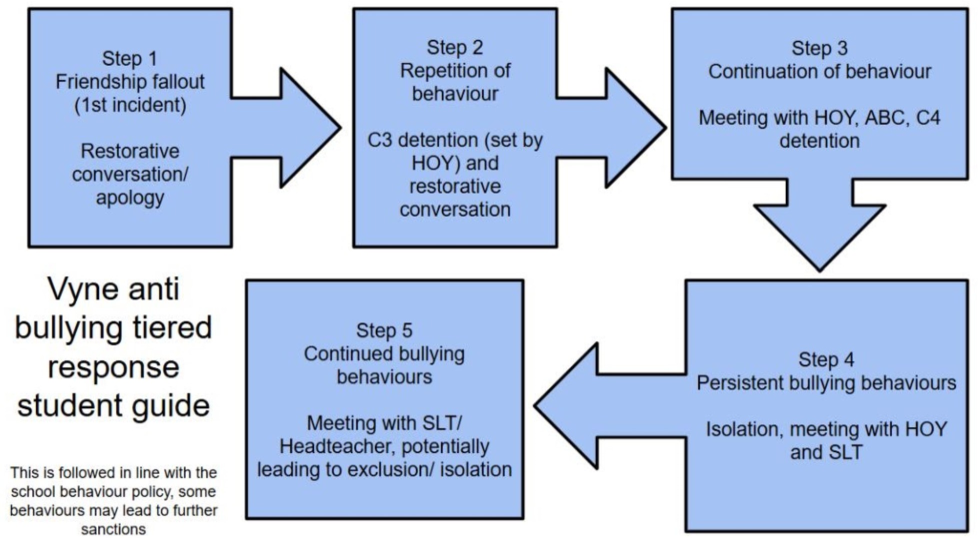
When a concern is raised, staff will listen, gather information and decide what action is needed. We have a tiered response which is followed. Our response will depend on the circumstances and needs of the young people involved.
This may include:
- speaking with the students involved;
- gathering information from witnesses;
- reviewing relevant records or other available evidence;
- providing support to the student who has experienced bullying;
- working with parents and carers;
- appropriate sanctions in line with our Behaviour Policy;
- restorative or educational work where appropriate;
- pastoral intervention and monitoring; and
- safeguarding action where there are wider concerns about a child's safety or wellbeing.
Our aim is not simply to respond to an individual incident. We want the harmful behaviour to stop and stay stopped.
We will therefore monitor situations where appropriate and continue to work with the students involved.
Supporting Students
Experiencing bullying can affect a young person's confidence, wellbeing, attendance and ability to learn.
We will listen to students and consider what support they need.
This may include support from their tutor or pastoral team, regular check-ins, adjustments within school or involvement from our safeguarding team and other services where appropriate.
We also recognise that students who display bullying behaviour may themselves need support to understand and change their behaviour.
Supporting a student does not remove accountability. We can hold young people responsible for their choices while also helping them to make better ones.
Online Bullying
Bullying does not stop at the school gate.
Online behaviour can have a significant impact on young people's wellbeing and relationships in school. Students are expected to demonstrate the same standards of respect online as they do face-to-face.
We encourage students to:
- avoid responding or retaliating;
- keep evidence such as screenshots where it is safe to do so;
- use appropriate blocking and reporting functions;
- tell a trusted adult; and
- report serious or harmful content through the appropriate platform.
Where online behaviour affects the safety or wellbeing of members of our school community, the school may take action in accordance with our Behaviour and Safeguarding policies.
Respecting Difference
Difference is part of what makes a community stronger.
We expect students to respect others regardless of their background, identity, beliefs, abilities or circumstances.
Discriminatory language and prejudicial behaviour are not dismissed as jokes or banter. Where they occur, we will challenge them and help students understand why such behaviour is harmful.
Our value of Empathy asks every member of our community to consider the experiences and perspectives of others and understand the impact their behaviour can have.
Working with Parents and Carers
Parents and carers are important partners in preventing and responding to bullying.
If you are concerned that your child is experiencing bullying, please contact the school. Providing as much information as possible, including dates, incidents, names and screenshots of online communication where relevant, can help us investigate effectively.
We also ask parents to contact us if they become aware that their child may have witnessed or been involved in bullying behaviour.
We recognise that these situations can be upsetting for families. Working calmly and collaboratively gives us the best opportunity to understand what has happened and resolve concerns effectively.
Our Commitment
We cannot create a respectful and inclusive school through policies alone. It depends upon the choices each member of our community makes every day.
We expect our students to treat others with dignity, to think about the impact of their actions and to have the courage to speak when something is wrong.
At The Vyne, we notice. We tell. We act.
No young person should feel that they have to face bullying alone.
The BIG Award
We were awarded the BIG Award by the Bullying Intervention Group in January of 2025, this is the second time we have received this award. The award assesses the policies and procedures used by the school and is awarded following a process in which a portfolio must be submitted for assessment.
“The Vyne School has been a member of the Bullying Intervention Group for several years and has now achieved the BIG Award for Excellence in Challenging Bullying in 2021 and 2024. This award is achieved by schools which have a range of excellent anti-bullying strategies in place including: a peer support scheme, regular staff training, anti-bullying awareness raising and having an anti-bullying focus group and up to date, robust anti-bullying policy. Students have a reporting system should they require help, and the peer support scheme is well managed and effective, with a student reporting that they felt pleased they had someone to talk to in the first instance when they experienced an issue. Bullying can occur in any school, but The Vyne School, students, staff and parents too, are all committed to addressing and preventing it so that students can study and socialise in a happy, safe environment. Congratulations to all and well done.”
Val McFarlane, Director, Bullying Intervention Group